Home/Blog/Did Your AI Citations Rise Because of Your Work? How to S...
AISEO Strategy2026.11.24
Did Your AI Citations Rise Because of Your Work? How to Spot a Shifting "Denominator" After Model Updates
Suppose your AI search measurement tool shows that your site's citations jumped from last month. It is tempting to report that your efforts paid off, but there is something to check first: whether the total number of sources and brands the AI shows in each answer, the "denominator," has grown. In HubSpot's measurement data, cited URLs per prompt rose 51% after a ChatGPT model update.
+51%ChatGPT cited URLs per prompt, before vs. after the August 6, 2026 model update (HubSpot data, Growth Memo)
−27%Drop in Gemini citations per prompt on the day Gemini 3.7 Flash became generally available (same source)
10.63%Share of AI Overviews without a sources panel after Gemini 3; 0.11% before (SE Ranking)
The denominator rises and falls with AI model and interface updates, regardless of what companies do. If you track raw citation or mention counts, you will misread the effect of your work. What you should watch is your share of the denominator and the timing of AI updates.
When the numbers move
What to check
Your citations went up
Did the total number of sources in the same answers also go up?
Your citations went down
Does the timing overlap with an AI model or interface update?
Citations rose but traffic did not
Are you assuming citations and traffic move in the same direction?
Based on a Growth Memo article that analyzed HubSpot's data, this article explains how the denominator moved in ChatGPT, Gemini, and Google AI Overviews, and how to check the denominator with Dr.AISEO.
The number of sources ChatGPT shows per answer grew about 1.5x after its model update on August 6, 2026. Companies whose citations rose during this period may have seen that increase regardless of their own work.
Cited URLs Rose 51%, Fan-Out Queries 69%
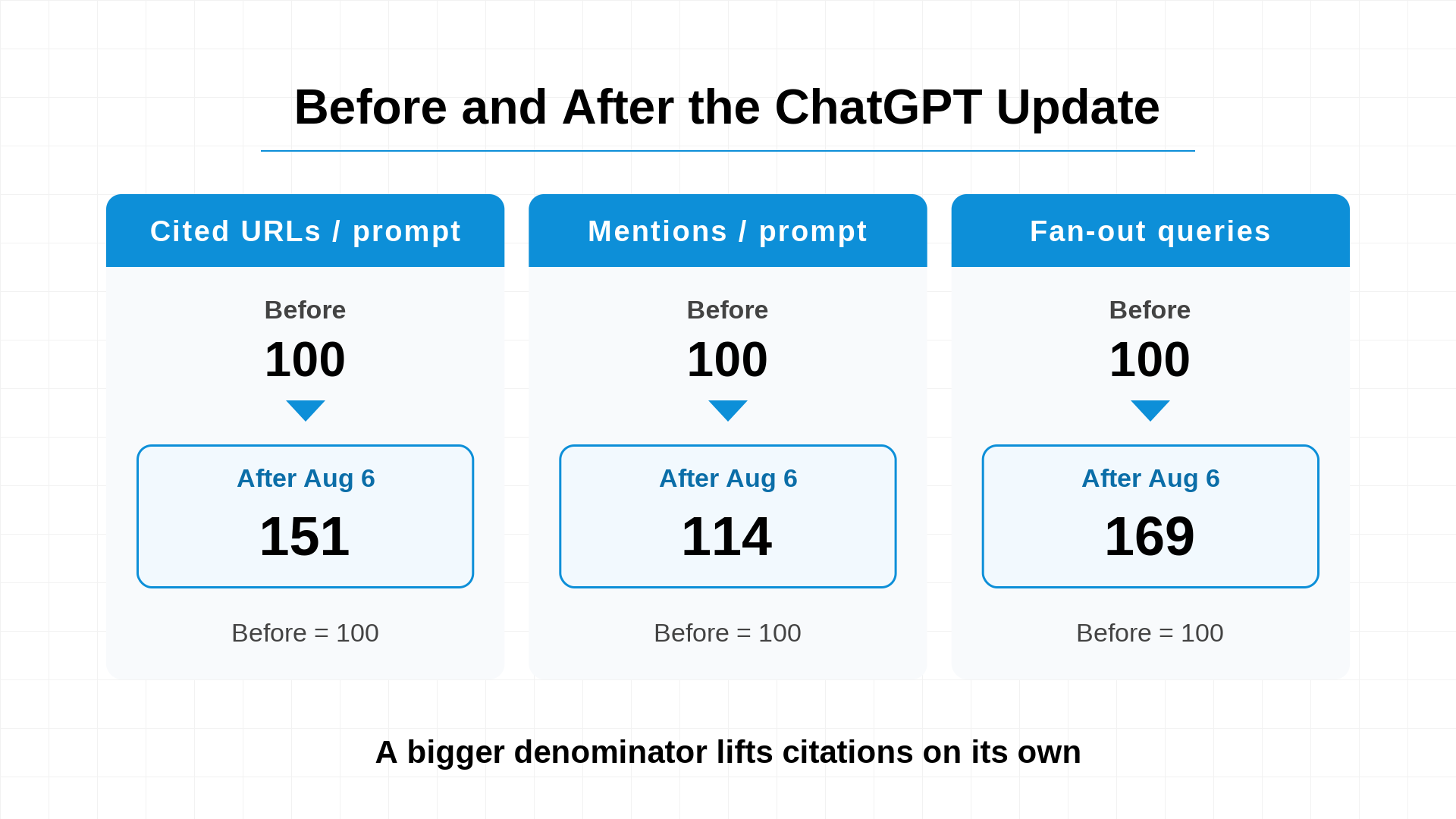
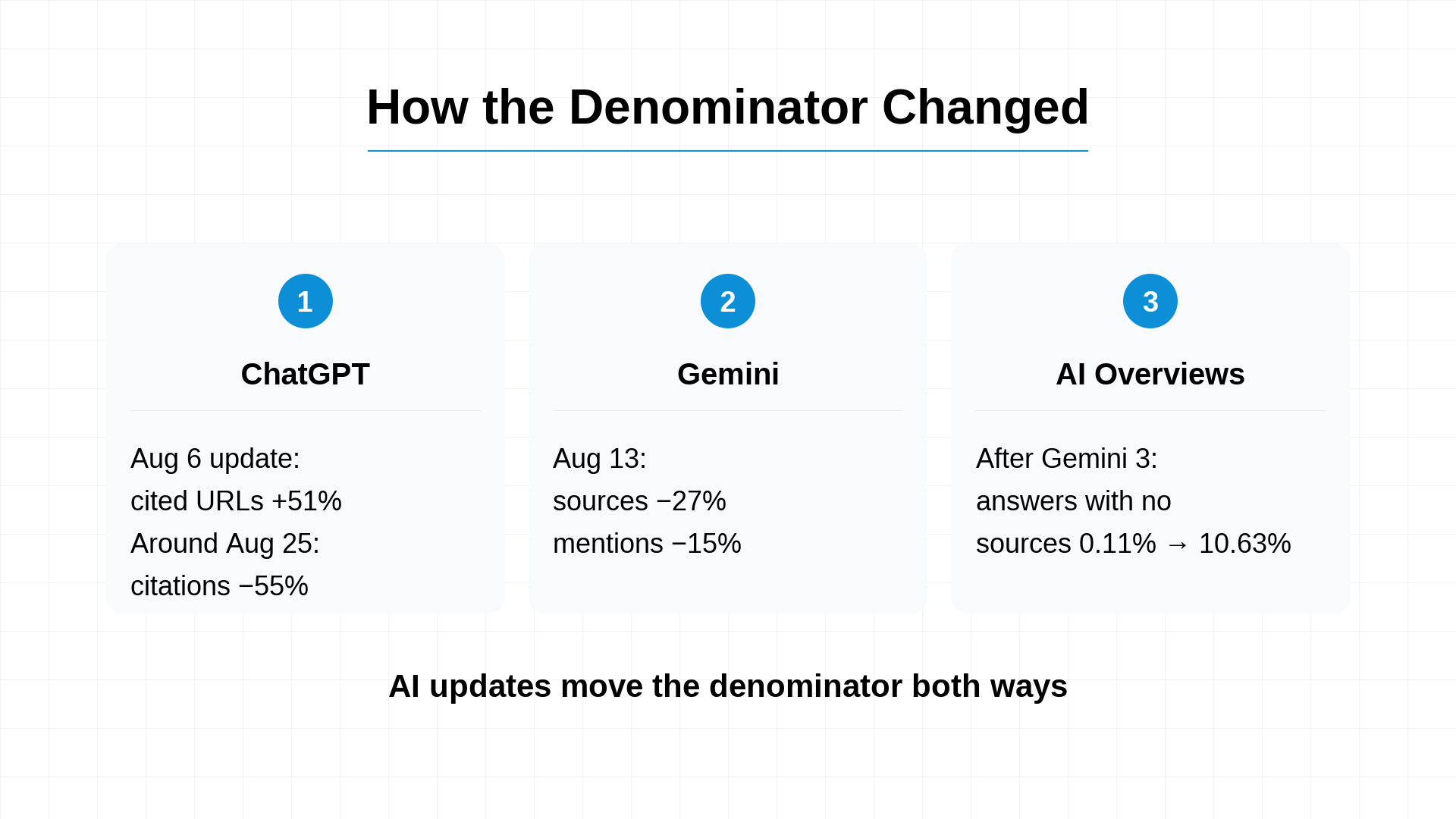
Kevin Indig, who runs Growth Memo, analyzed measurement data provided by HubSpot (Growth Memo). After the August 6 ChatGPT update (GPT-5.6), cited URLs per prompt rose 51% and brand mentions rose 14%. The number of "fan-out queries," the extra searches the AI runs to broaden its research while building an answer, rose 69%. With the pre-update level set to 100, cited URLs reached 151, mentions 114, and fan-out queries 169.
More fan-out queries mean the AI reads more pages and lists more sources in its answers. If the denominator grows 1.5x, your citations will look higher even if the way the AI treats your pages has not changed.
More Citations Did Not Bring More Traffic
The same analysis also looked at the weekly correlation between "citations per prompt" and "AI referral traffic." From May to mid-September 2026, the correlation was −0.36 for ChatGPT and −0.53 for Gemini. In weeks with more citations, AI referral traffic was actually lower.
The analysis used data from HubSpot's measurement service, AI Search Sensor. It covers three engines, ChatGPT, Gemini, and Perplexity, from May 1 to September 14, 2026, with about 210 million prompt runs, about 1.7 billion citations, and about 657 million brand mentions. This article presents the ChatGPT and Gemini figures.
Indig himself states the limits. The prompt mix was not fixed during the period, and daily prompt runs rose 22.4% between the compared windows. AI referral traffic is HubSpot's modeled estimate and does not link individual citations to visits. The figures describe overall trends in the data, not individual brands.
The Denominator Rises and Falls with AI Updates
The denominator does not only move upward. In the same period, Gemini's sources fell sharply, and AI Overviews changed how it shows sources. Indig sums up the situation as "model releases are the new algorithm updates."
ChatGPT: Up, Then Sharply Down About Two Weeks Later
ChatGPT's denominator did not move in one direction. After rising with the August 6 update, citations per prompt fell 55% around August 25, while mentions rose 4% (Growth Memo). The article does not state the baseline period for this comparison, but within less than a month, the denominator rose sharply and then fell sharply.
Gemini: Sources Fell 27% on the Day a New Model Launched
On August 13, Gemini 3.7 Flash became generally available. On that same day, citations per prompt fell 27% and mentions fell 15% compared with the previous day. From June to July, the number of pages Gemini showed as sources also fell from 11.5 to 5.4, down 53% (Growth Memo).
Companies whose Gemini citations dropped during this period may have been hit by a shrinking denominator rather than a failed tactic.
AI Overviews: Answers Without a Sources Panel Rose to One in Ten
AI Overviews also changed how it shows sources when its model switched. Google announced on January 27, 2026 that Gemini 3 would become the default model for AI Overviews. SE Ranking compared 100,000 US keywords before (January 5) and after (January 29) the announcement and found that the share of AI Overviews without a sources panel rose from 0.11% to 10.63% (SE Ranking).
Among answers with sources, the average number of sources per answer stayed nearly flat, from 11.55 to 12.1. However, the share of answers with 1 to 5 sources rose from 6.07% to 12.63%, and the share with 11 to 15 sources fell from 30.75% to 19.49%. The average stayed the same, but the spread in the number of sources per answer changed.
Google reportedly acknowledged the missing sources as a bug. SE Ranking itself says it cannot separate the effects of the model switch from the bug. For AI Overviews as well, you need to view the timing of Google's updates alongside changes in your numbers.
Citations and Mentions Move in Opposite Ways Depending on the Engine
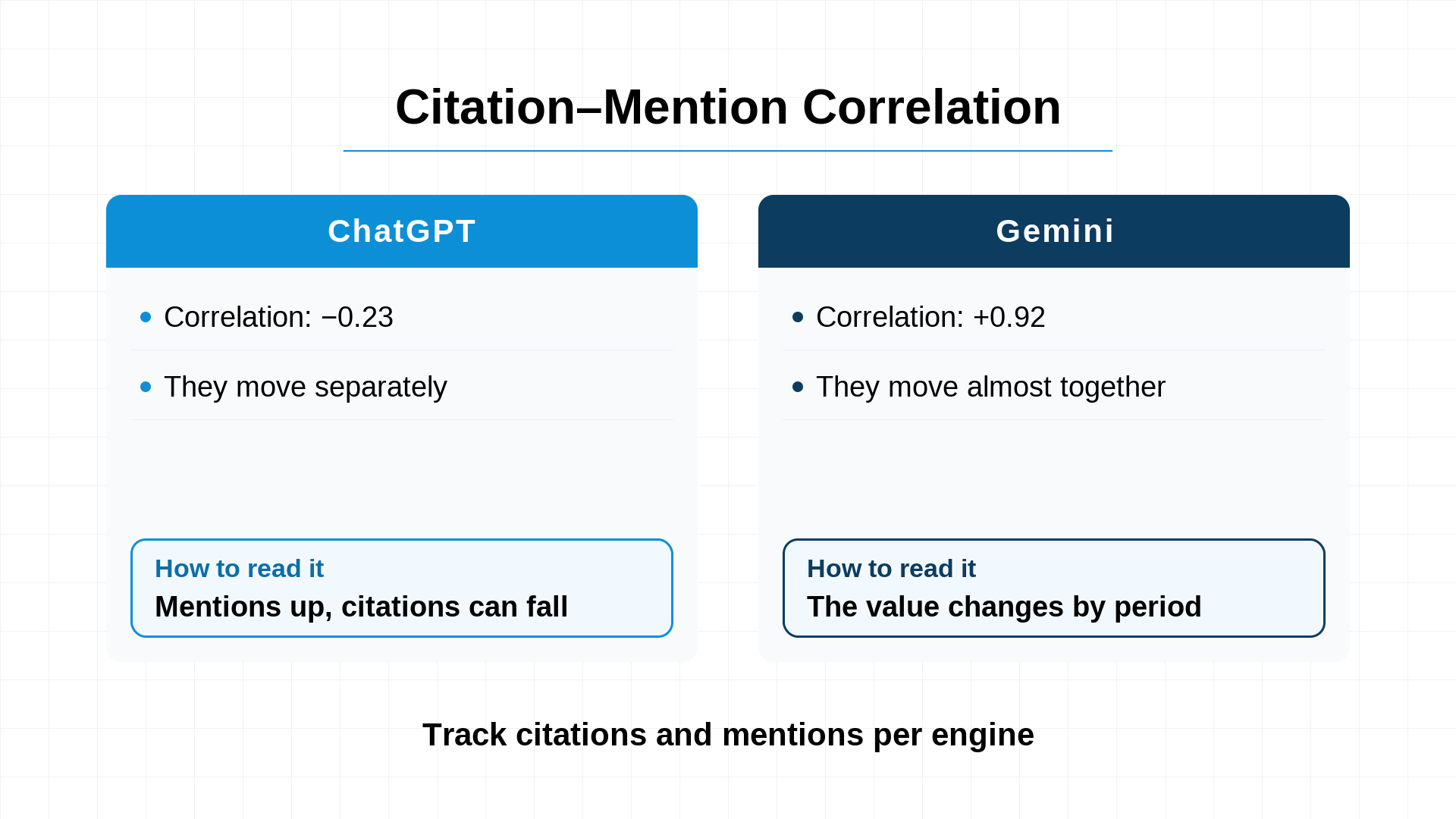
More citations do not always mean more mentions. In Gemini, citations and mentions moved in almost the same direction, but in ChatGPT they tended to move apart. You need to track citations and mentions separately for each engine.
Gemini Moves Together, ChatGPT Moves Separately
Indig examined the correlation between cited URLs and mentions per prompt using daily figures from July 6 to September 13, 2026 (Growth Memo). Gemini came in at +0.92: on days when citations rose, mentions rose almost the same way. ChatGPT came in at −0.23: citations and mentions barely moved together.
In ChatGPT, citations fell 55% around August 25 while mentions rose 4%. If your ChatGPT mentions rose in a month when your citations fell, that does not necessarily mean the AI is treating you worse.
The Correlation Itself Changes with the Period
The correlation values are not fixed. Indig's article also shows that Gemini's correlation changes a great deal depending on which period you calculate it over.
What you can conclude is only the tendency that "citations and mentions relate differently in Gemini and ChatGPT." When you read your own numbers, place citations and mentions side by side as separate metrics and look at each engine separately. The idea of measuring mentions and citations separately is also laid out in "Is AI Search a Waste Because It Sends Little Traffic? How to Measure It as a Brand Channel."
The Types of Sources That Grow Also Move Your Numbers
The denominator changes in content, not just in size. When the types of pages the AI picks as sources change, the share of citations going to your site and competitors' sites also changes.
ChatGPT: More Competitor Sites, Fewer Forums and Videos
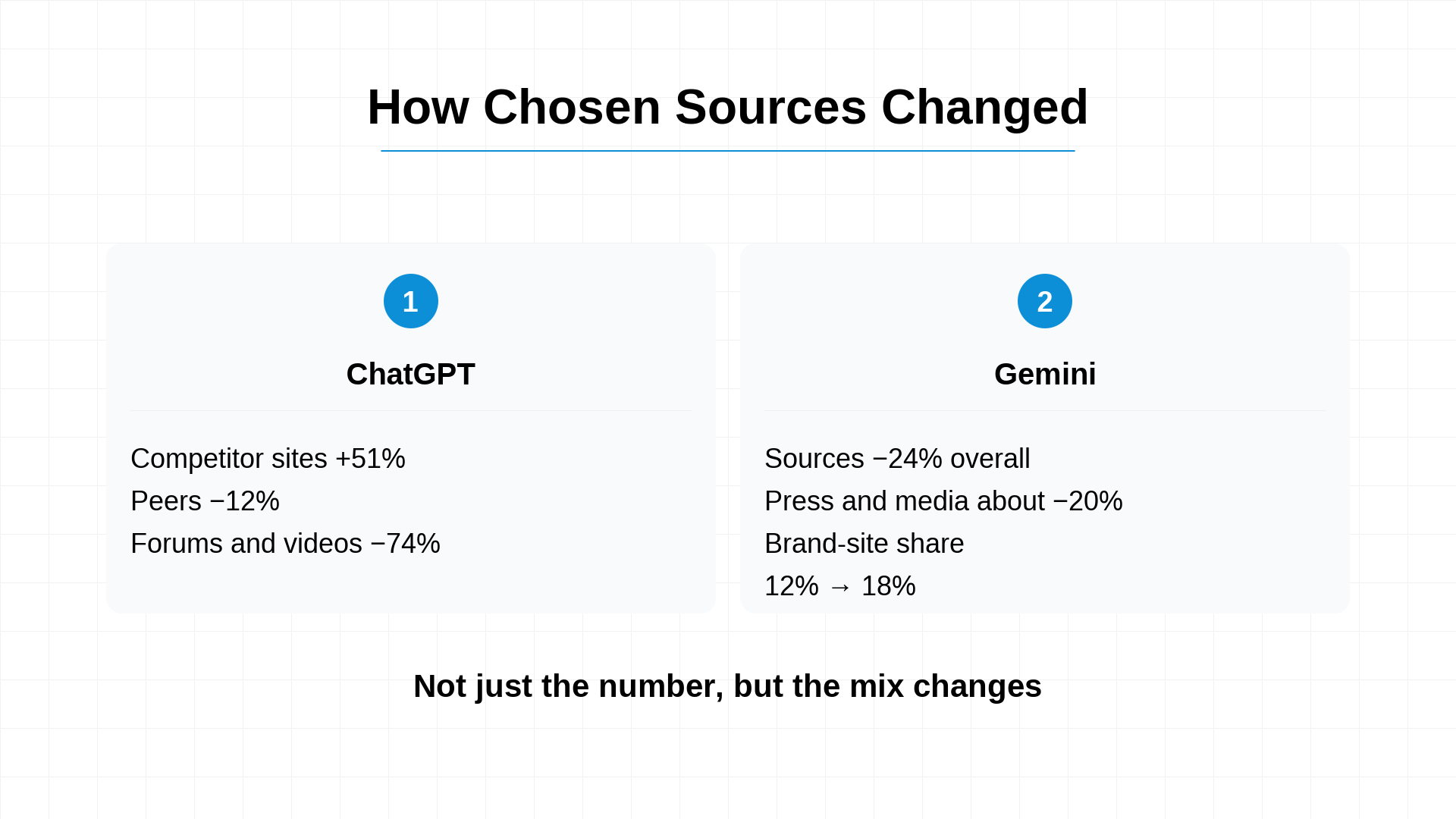
HubSpot's data sorts cited URLs into your own site, competitor sites, peers, and other sources. Comparing July 6 to August 2 with August 17 to September 13, 2026, ChatGPT's competitor citations per prompt rose 51% and peer citations fell 12% (Growth Memo). From July to mid-September, forum and video citations fell 74%.
When competitor sites became more likely to be picked as sources, your own site may also have had more chances to be picked. Even if your citations rose, your relative position falls if competitors' citations rose even more.
Gemini: Fewer Sources, a Larger Share for Brand Sites
In the same period, Gemini's sources per prompt fell 24% overall, and press and media citations fell about 20%. Meanwhile, the share of sources from brand sites (your own and competitors' combined) rose from 12% to 18% in late June and stayed at that level.
The Share of Comparison Articles Changed Too
Indig also describes changes in content types. Among classified content, the share of comparison articles that list multiple products or services rose from 19.7% to 38.2% in Gemini. He points out that it matters not only whether you appear in a comparison article, but also where in it you appear.
When the mix of source types changes, the same page of yours gets a different chance of being cited. When your numbers move, also check which types of sources increased or decreased.
Four Steps to Read the Numbers Correctly
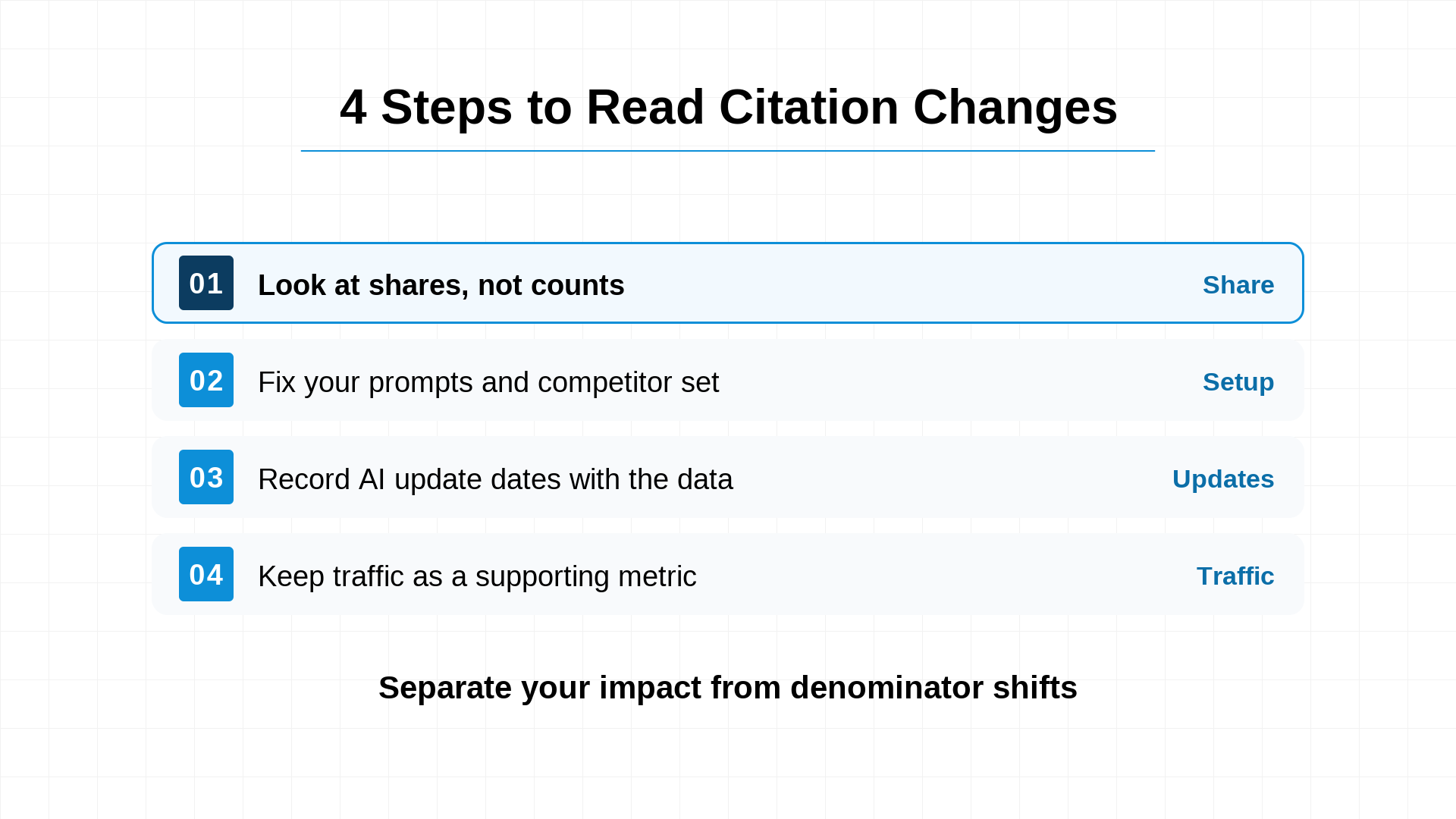
There are four steps to tell whether a change in citations or mentions comes from your work: look at shares, compare under the same conditions, record AI updates, and do not make traffic your main metric.
Look at shares, not counts: Divide your citations by the total number of sources listed in the same answers. Look at mentions as a share of all brand mentions, including competitors. Indig also says that only your share tells you whether you gained ground.
Fix your prompts and competitor set: If you swap the prompt mix or the competitors you compare against midway, the numbers move regardless of your work. Similarweb recommends locking the prompts that form your baseline, recording the reason and date whenever you change them, and running old and new versions in parallel for 28 days (Similarweb). Semrush also recommends using a fixed core set of prompts as the baseline and recording any changes to prompts or engines, noting them in your reports (Semrush).
Record AI update dates alongside the data: Note update dates from OpenAI's model release notes and Gemini's release notes, and mark them on your trend lines. If a big move in your numbers falls on an update date, suspect a change in the denominator first.
Keep traffic as a supporting metric: Citations and traffic do not always move in the same direction. Use traffic as a supporting metric to view alongside the trend, and supplement it with other methods, such as asking customers "how did you hear about us?" during sales conversations or inquiries.
These four steps apply to ChatGPT, Gemini, and AI Overviews alike. The same models are used for answers in Japanese, so changes in the denominator from model updates can happen there too. Little public data shows how much answers in Japanese changed, so keeping up your own measurement under the same conditions is the best way to notice changes.
How to Check the Denominator with Dr.AISEO
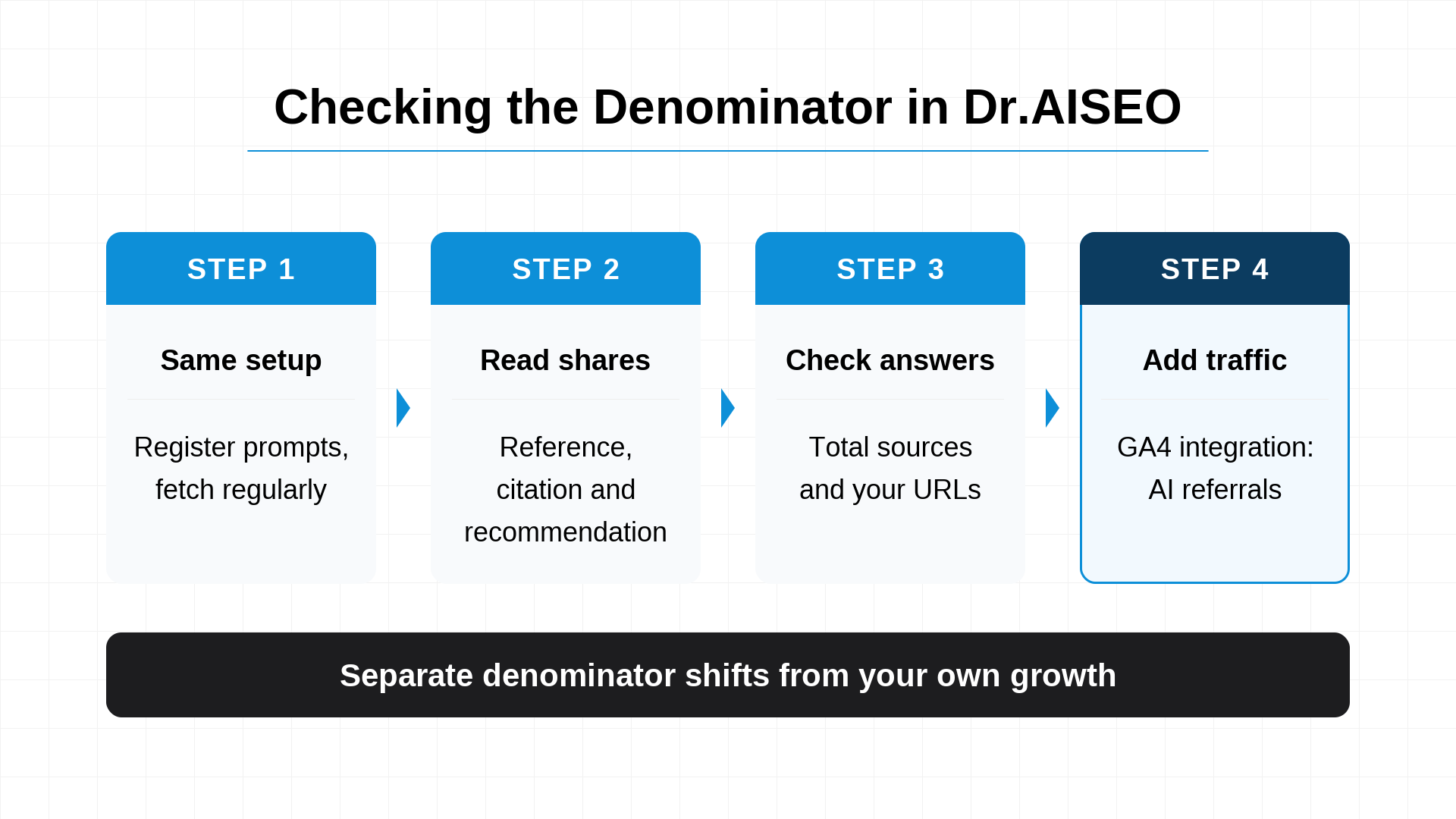
Dr.AISEO's main metrics are designed as shares from the start. Because the denominator is explicit, a rise in the AI's total number of sources alone does not raise your rate. You can also check the total number of sources and your own URLs for each answer, so you can trace why a number moved back to the content of the answers.
Metrics Are Shown as Shares with a Defined Numerator and Denominator
Dr.AISEO defines its main metrics as follows (as of November 2026).
Metric
Numerator
Denominator
Reference rate
URLs from your domain that the AI consulted
All URLs the AI consulted
Citation rate
URLs from your domain that the AI cited
All URLs the AI cited
Brand recommendation rate
Answers that recommended your brand
Answers to general prompts (questions that do not include your company name) that recommended any brand
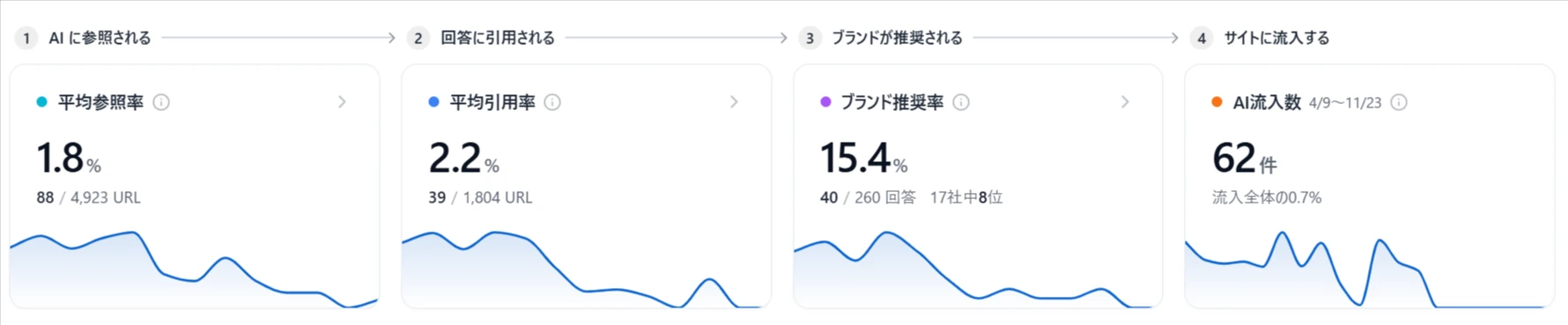
The exposure analysis screen. Each metric shows its numerator and denominator below it.
Reference rate and citation rate use the AI's total number of URLs as the denominator. Even if the total number of sources grows 1.5x, your rate stays the same if your URLs grow by the same proportion. Your rate rises only when your share of the sources grows.
Brand recommendation rate leaves answers that recommended no brand out of the denominator. Even if AI updates increase or decrease "answers that name no brand," you can read the rate as your share among answers that made a recommendation. On the other hand, if answers that name brands decrease, the denominator shrinks and the rate becomes more volatile. When you look at brand recommendation rate, also check the number of answers behind it.
Competitors' recommendation rates count only answers after the date each competitor was registered. Adding a competitor midway does not mix answers from before it was added into the denominator.
Check the Total Sources and Your Own URLs in Each Answer
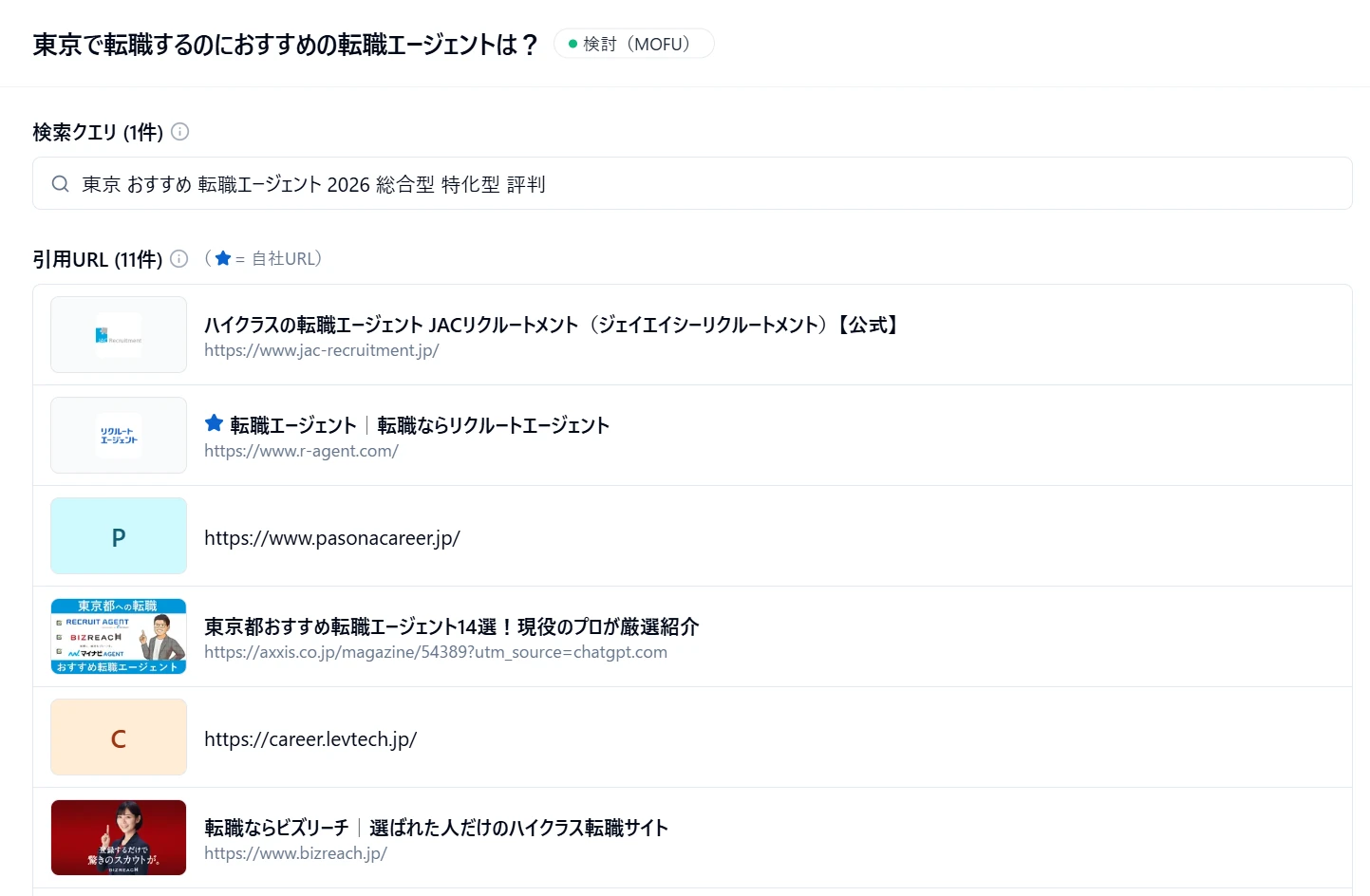
When a rate moves, you can open the underlying answers to check. Dr.AISEO keeps not only the aggregated numbers but also the full text of each AI answer and all consulted and cited URLs. Because you can see the total number of sources in each answer and which of them are your URLs, you can tell whether "the total number of sources grew" or "your URLs grew."
The answer log screen shows the total number of cited URLs and which of them are your own (marked with a star).
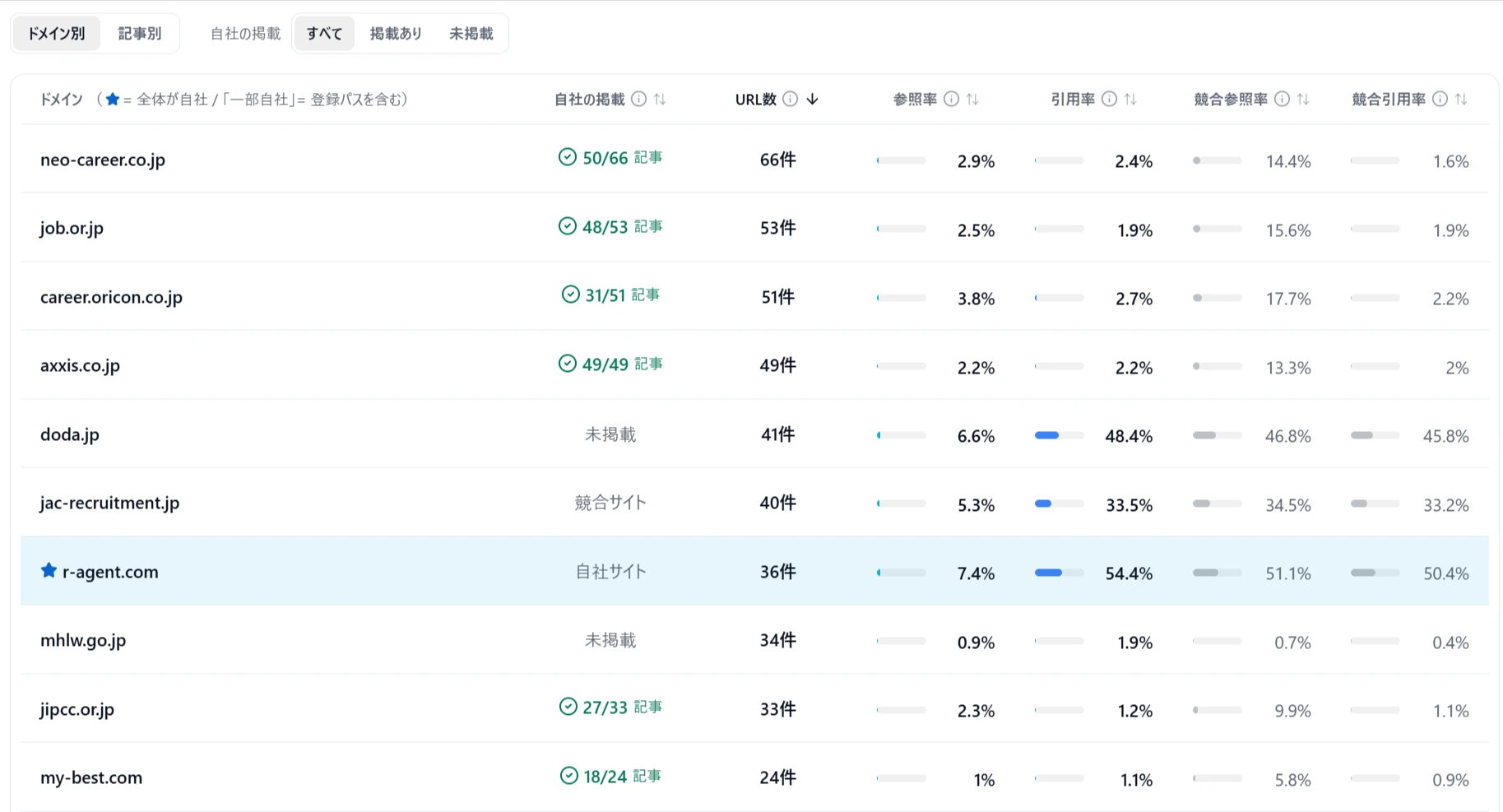
You can check which types of sites are being chosen as sources on the "Referenced articles" screen. It shows the reference rate and number of URLs for each domain and whether your brand appears there, and it can also calculate the reference rate limited to answers that mentioned competitors. If competitor sites or comparison articles are growing, you can see which comparison articles do not include you and which competitor pages are being chosen.
The referenced articles screen shows which domains are chosen as sources and whether your brand appears in them.
Run the Same Prompts Repeatedly and Compare Before and After Updates
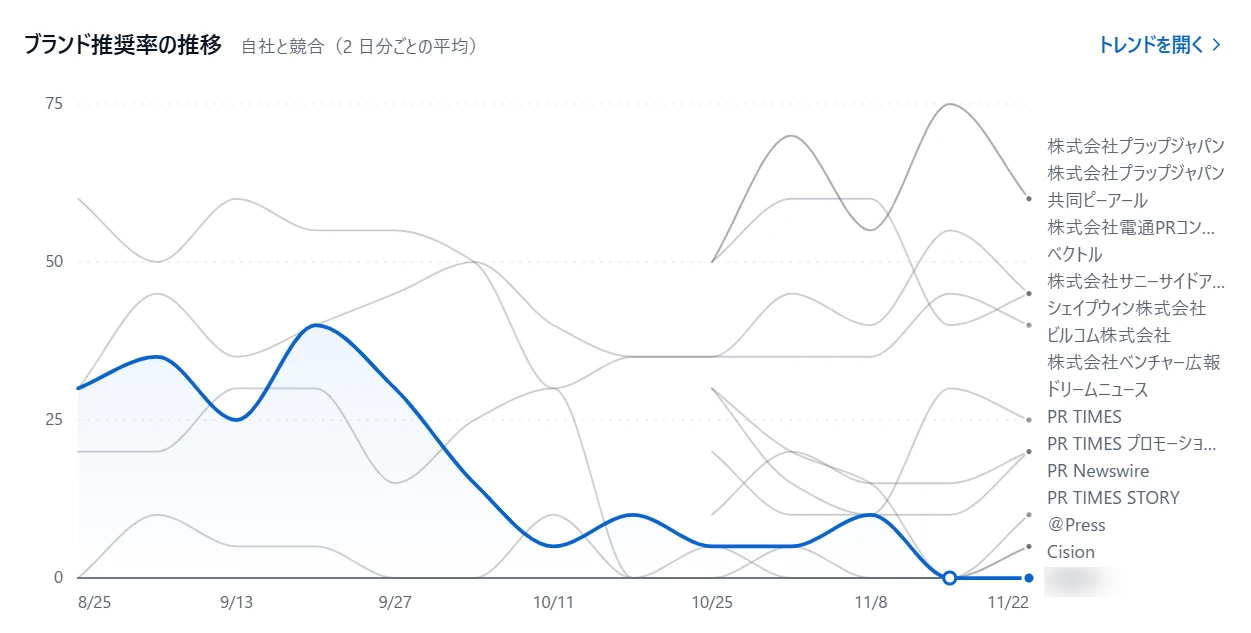
Registered prompts run repeatedly on a regular schedule under the same conditions (once a week on the Free plan, twice a week on Light, and up to daily on Growth and above, where you choose the days; as of November 2026). Because the history is kept, you can compare answers to the same prompts before and after an AI update.
The brand recommendation rate trend screen. It lines up your brand's and competitors' trends so you can compare before and after AI updates.
Dr.AISEO does not display the name of the model that generated each answer. For ChatGPT and AI Overviews, it captures the same answers users see on screen, so each provider's model updates show up directly in the numbers. Gemini is measured through an API with a fixed model, so it is not affected by model updates in the Gemini app. When you read the ChatGPT and AI Overviews numbers, we recommend noting update dates from each provider's release notes, as described in the previous section, and reading them alongside the trends.
View Traffic Alongside via the GA4 Integration
With the GA4 integration, you can view traffic to your site from AI services such as ChatGPT, Claude, and Gemini over 7, 14, 30, or 90 days, alongside your AI metrics. The GA4 integration is available on paid plans (Light and above) as of November 2026. You can check whether citation rate and traffic move in the same direction and use traffic as a supporting metric.
Summary: Look at Your Share of the Denominator, Not Raw Citations
The total number of sources and brands the AI shows moves with model and interface updates, regardless of what companies do. In HubSpot's data, ChatGPT's cited URLs rose 51% after an update, and Gemini's citations fell 27% on the day a new model launched. In AI Overviews, too, answers without a sources panel rose to one in ten after the model switch.
When citations move, first check whether the denominator moved. By looking at shares instead of counts, fixing your prompts and competitor set, and recording AI update dates alongside the data, you can separate the effect of your work from changes in the denominator. Citations and traffic do not always move in the same direction, so keep traffic as a supporting metric.
Dr.AISEO shows reference rate, citation rate, and brand recommendation rate as shares with a defined numerator and denominator, and lets you check the total sources and your own URLs in each answer. You can try it starting with the Free plan.