Home/Blog/AI Overviews Now Appear on 80% of Branded Searches...
Trends2026.10.14
AI Overviews Now Appear on 80% of Branded Searches. When People Search Your Name, What Do They Read First?
In September 2026, AI Overviews became a near-standard feature on US Google searches that include a brand name. According to Ahrefs, as of September 29 they appeared on 82.91% of US desktop search results for such queries. When people search for your company by name, the first thing they read is increasingly an AI summary, not your own website.
82.91%Share of US searches containing a brand name that showed an AI Overview (September 29, 2026, per Ahrefs)
76.2%Share of AI Overviews for major brand names that appeared in the top position of search results
71.9%Share of AI Overviews for brand names that cited Wikipedia as a source
What's more, the sources behind those summaries are mostly external pages such as Wikipedia, YouTube, and LinkedIn. Branded search has long been thought of as "the search where your own site ranks first, with no management needed." From now on, it becomes something you need to check and maintain: what AI is saying about your company, and which sources it is relying on.
Branded search until now
Branded search with AI Overviews
What people see first
Your own website
An AI-generated summary
Who describes your company
You
AI (citing external pages as sources)
What you need to check
Rankings
The content of the summary and its sources
In this article, we use multiple studies to lay out what happened in September, explain how to check and fix what appears for your brand name, and show how to keep tracking AI answers to branded searches with Dr.AISEO.
What Happened to Brand-Name Searches in September 2026
In September 2026, data from several measurement companies showed a sharp jump in the share of searches containing a brand name that displayed an AI Overview. Google has made no announcement about this change.
Three Studies Show the Surge
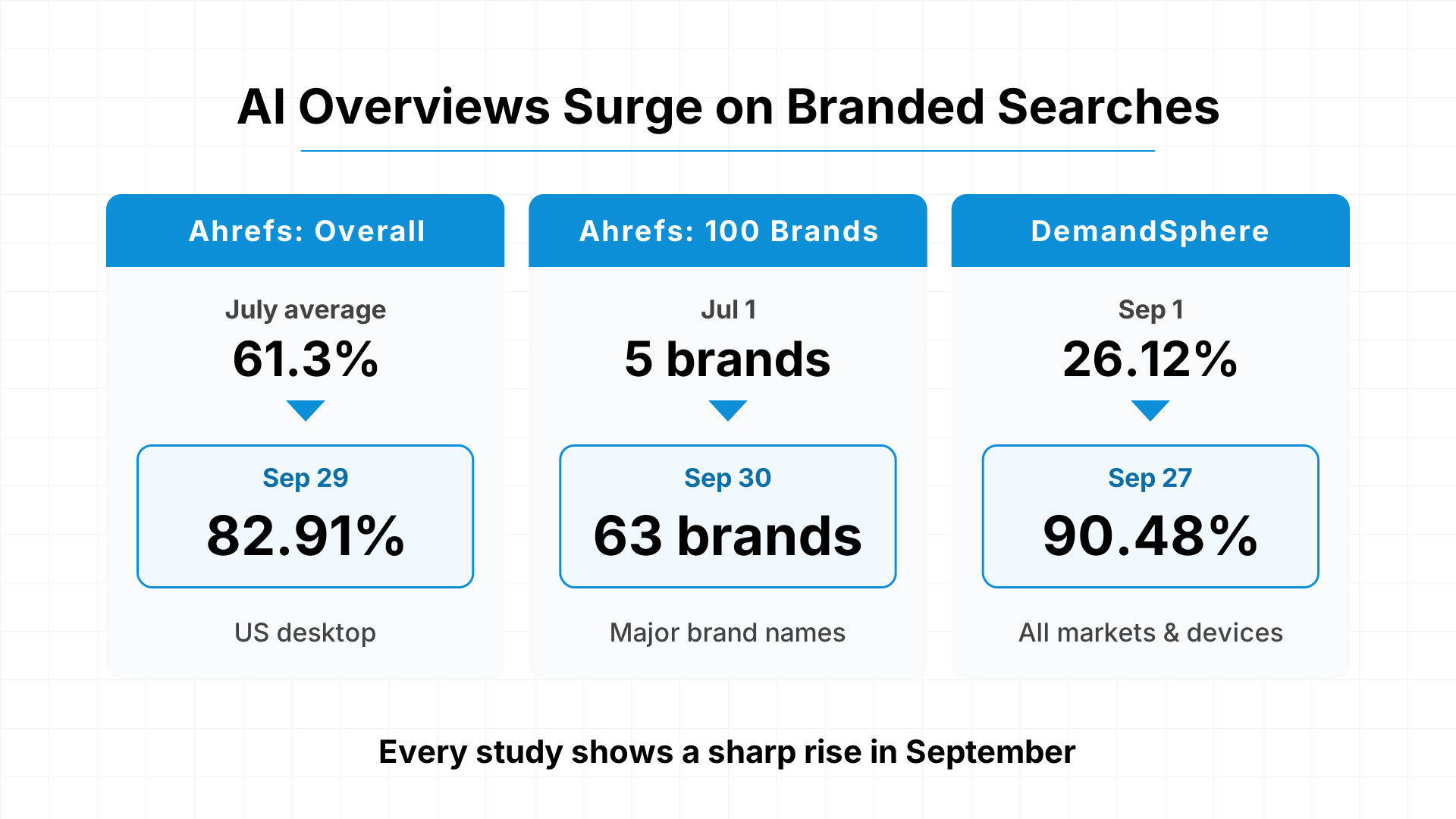
Ahrefs analyzed 232.8 million US desktop Google search results, including 92.5 million searches containing a brand name. The share of brand-name searches showing an AI Overview rose on a monthly-average basis from 61.3% in July to 65.1% in August and 73.3% in September, reaching 82.91% as of September 29. For searches without a brand name, the figure was 78.3% in September, an increase of only 4.8 percentage points from July. (Ahrefs)
Separately, Ahrefs searches each week for the bare names of 100 brands selected from Interbrand's Best Global Brands 2025 ranking. The number of brands showing an AI Overview went from 5 out of 98 on July 1 to 63 out of 100 on September 30. Most of the increase came after September began. (Ahrefs)
Daily data from DemandSphere, which provides a rank-tracking tool, confirms the same trend. The share of tracked brand-name searches showing an AI Overview rose from 26.12% on September 1 to 90.48% on September 27. (DemandSphere) In addition, Chris Long of Nectiv found AI Overviews for 93 of 100 major company brands. According to checks by Barry Schwartz of Search Engine Roundtable, Google's own name and the names of news organizations were exceptions. (Semrush)
Caveats When Reading the Numbers
None of the three studies publishes its definition of a "search containing a brand name." Their scope also differs: Ahrefs covers US desktop, while DemandSphere combines all markets and all devices. The figures therefore cannot be compared directly.
Both companies also sell measurement tools, and their articles double as promotions for those tools. Google has not announced the change, and it is unknown whether the situation will last. Even so, because multiple datasets collected in different ways all moved sharply in the same direction in September, it is reasonable to conclude that AI Overviews did spread across brand-name searches.
When you search for a brand name, the AI Overview almost always appears at the very top of the search results, and most of its sources are external pages rather than the brand's own site.
48 of 63 Appeared in the Top Position of Search Results
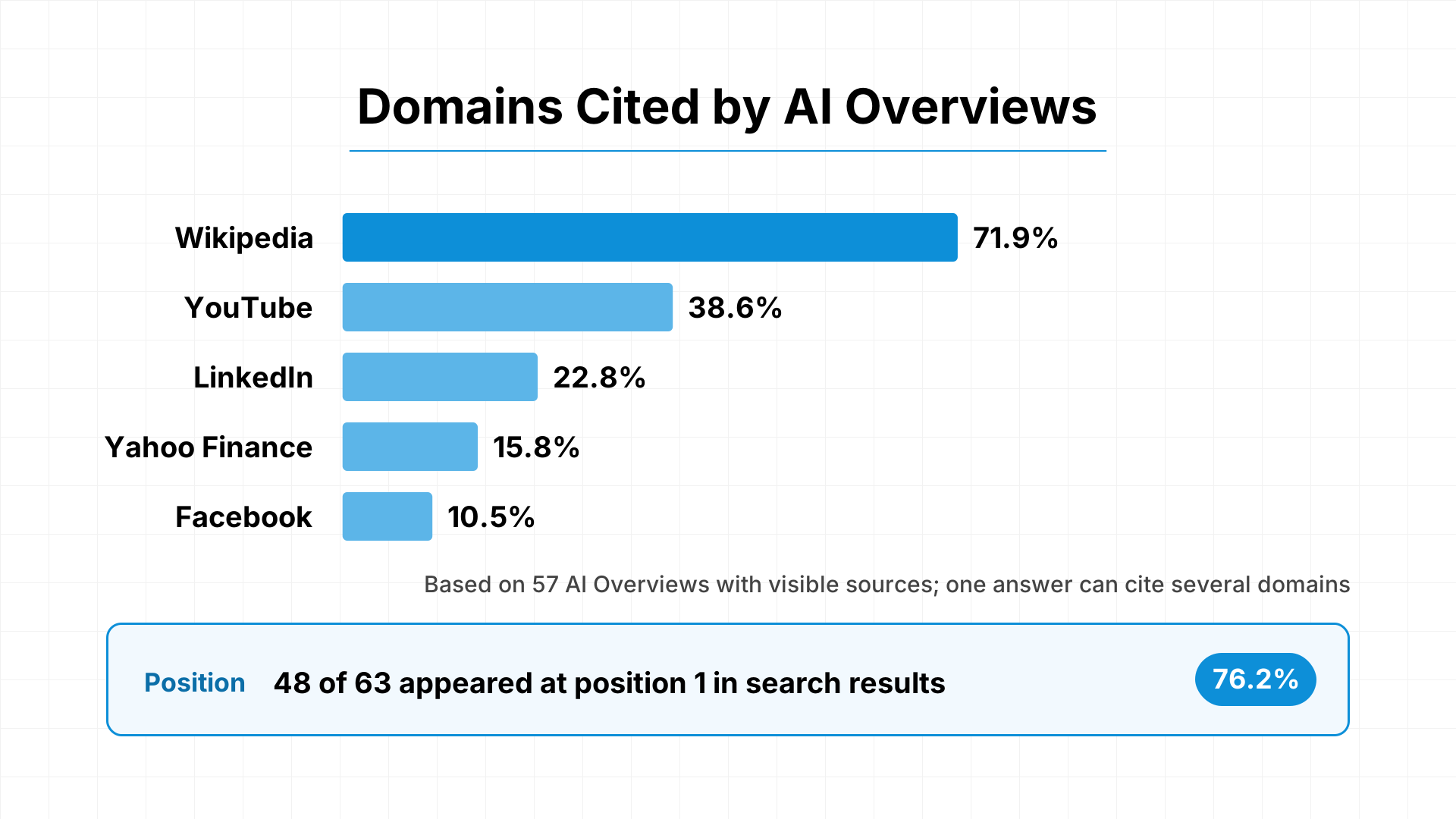
In Ahrefs' 100-brand study, 48 (76.2%) of the 63 AI Overviews shown on September 30 sat in the top position of the search results, with an average position of 1.49. (Ahrefs) In other words, the first thing people see when they search for a brand name is an AI summary, not a link to the brand's own site.
Sources Are Mainly Wikipedia, YouTube, and LinkedIn
Among the 57 AI Overviews whose source lists could be checked, Wikipedia was cited in 41 (71.9%). It was followed by YouTube in 22 (38.6%), LinkedIn in 13 (22.8%), Yahoo Finance in 9 (15.8%), and Facebook in 6 (10.5%). Because a single AI Overview cites multiple domains, the percentages add up to more than 100%. (Ahrefs)
How often brands' official websites were cited, however, was not published. Answers that mentioned a competing brand were rare, at 2 of 58 (3.4%): the Pepsi answer mentioned Coca-Cola, and the Intel answer mentioned TSMC and NVIDIA. AI Overviews, in other words, describe the brand itself based on external sources rather than comparing it with competitors. For more on which domains AI tends to cite, see "Which Domains Are Most Cited in AI Search? Decoding Citation Share Structure from 58.6 Million Data Points."
What Goes Wrong When AI Overviews Appear on Branded Searches?
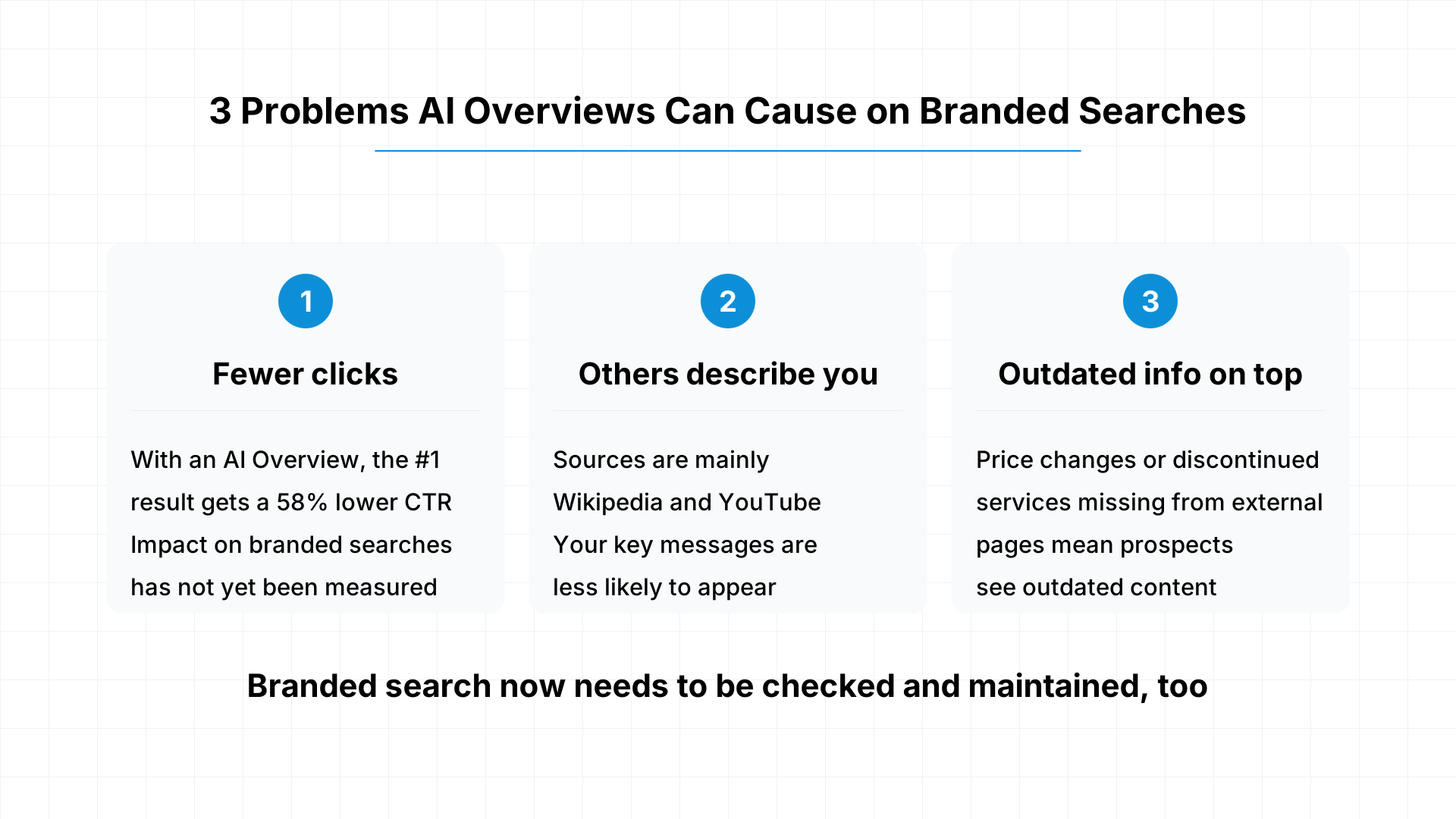
When AI Overviews appear on branded searches, three problems can arise: fewer clicks, handing the description of your company over to external pages, and outdated information appearing at the very top.
Clicks May Decline
In a study Ahrefs published in February 2026, the click-through rate of the top-ranking page was 58% lower on searches that showed an AI Overview than on those that did not. (Ahrefs) However, that study covered informational searches, and the impact on brand-name searches has not yet been measured.
People who search for a brand name often have a clear purpose, such as visiting the official site, logging in, or getting in touch, so they may still click through even after reading the summary. It would therefore be premature to assume that branded-search clicks will fall by 58%. The impact varies by industry and search intent, so you need to verify it with your own data. For how to prepare for changes in search traffic, see "[2026 Latest] The Shock of 20% Search Traffic Decline: "AISEO" Business Strategies for Maintaining Customer Touchpoints in the AI Answer Era."
External Pages Describe Your Company
If AI Overviews rely mainly on sources like Wikipedia and YouTube, then what describes your company at the top of the search results is not you, but external pages. Chris Long points out that external sources can now directly shape brand perception within the search results. (Search Engine Journal)
If the strengths you want to communicate on your own site, or the latest details of your services, are not written on external pages, they are less likely to be reflected in AI Overviews.
Outdated or Incorrect Information Appears at the Top
Ahrefs notes that AI Overviews may cite unofficial videos and display outdated product information. (Ahrefs) If price changes, discontinued services, or a company name change have not been reflected on external pages, outdated content will appear at the very top of branded searches.
Most people who run branded searches are prospects already considering your company or existing customers. If they receive incorrect information, it can increase the workload of handling inquiries or cause you to drop off their shortlist.
As of October 2026, we have found no public data showing the AI Overviews display rate for brand-name searches specifically in Japanese search results. DemandSphere's figures combine all markets and all devices, and the Ahrefs study covers only the US.
AI Overviews have been available in Japanese in Japan since August 2024. Rather than waiting for external research, checking for yourself is the more reliable way to find out whether this change has reached Japan. You can check what appears when people search for your brand name using the steps below.
How to Check What Appears for Your Brand Name
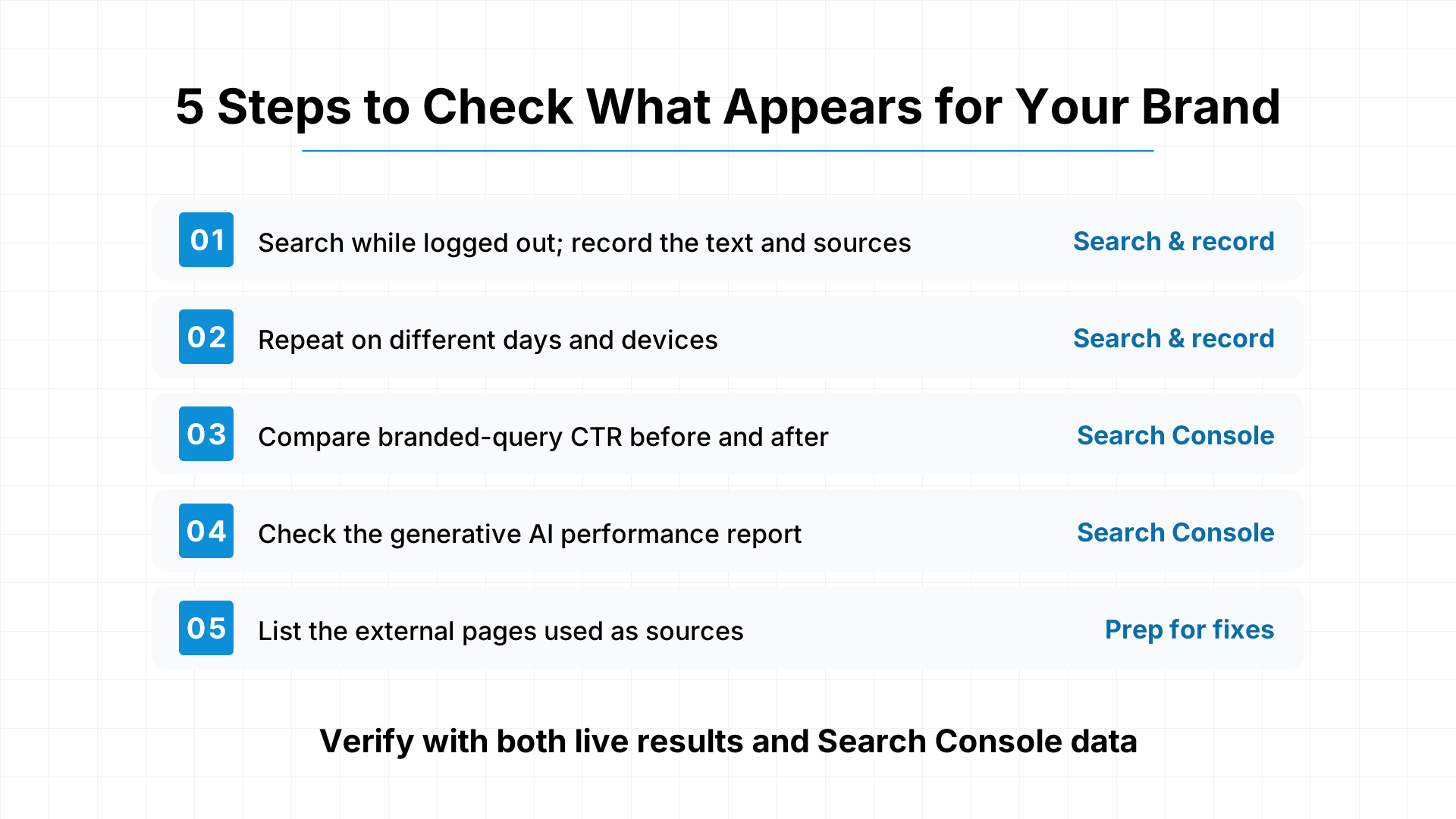
To check the AI Overviews that appear for your brand name, combine two methods: actually searching and recording the results, and using Google Search Console data to assess the impact.
Search and Record
Search while logged out: Search for your company name, service names, and main product names, and keep dated screenshots showing whether an AI Overview appears, the text it displays, and its source links.
Repeat on different days and devices: AI Overviews may appear on some days and not others, even for the same search. Check several times on different days, on both desktop and smartphone.
Assess the Impact in Search Console
Compare click-through rates for branded queries: The "Branded queries" filter in Search Console's Performance report lets you narrow down to searches containing your brand name. (Google Search Central) Compare the click-through rate for one week before and one week after AI Overviews started appearing. If the click-through rate drops while your ranking stays the same, suspect an AI Overviews effect. Look at the click-through rate rather than the number of clicks, because the volume of branded searches itself rises and falls over time.
Check the generative AI performance report: Since August 31, 2026, you can see how many times links to your site were shown within AI Overviews and AI Mode. (Search Console Help) You can view it by page, country, date, and device, but you cannot filter by search query, so you cannot isolate figures for brand-name searches alone.
The branded queries filter is available only for top-level properties with sufficient search volume, and because Google classifies queries automatically, it may miss some searches that contain your brand name. No country restrictions have been announced for either report.
List the External Pages Used as Sources
Make a list of the pages used as sources: Take the source links you recorded in step 1 and list them, separating those you manage yourself (such as your official YouTube channel or LinkedIn company page) from those you don't. The next section uses this list to take action.
Fix the Pages That AI Overviews Cite
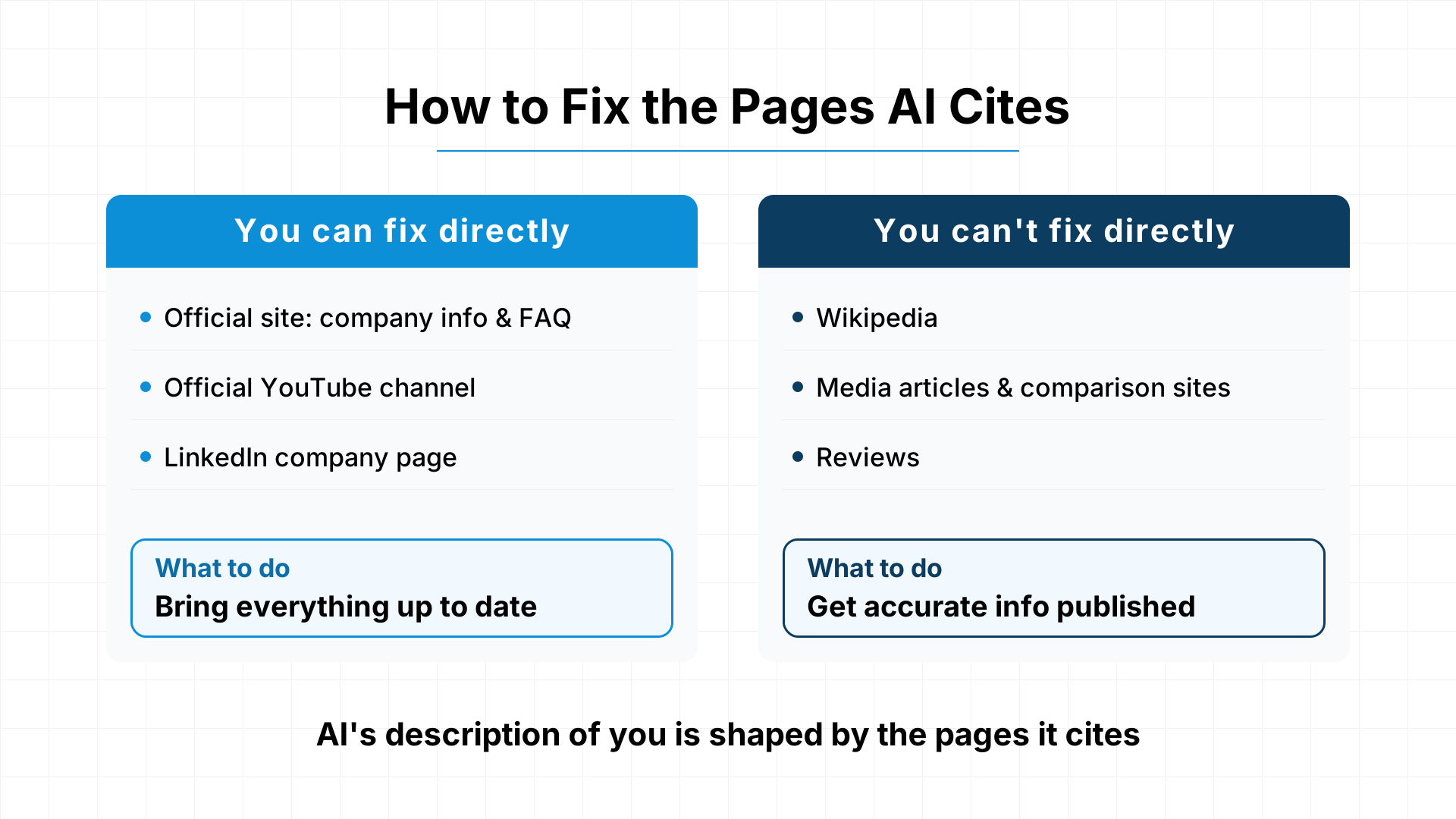
What an AI Overview says is determined by the content of the pages it cites. Bring the pages you can edit up to date, and for pages you cannot edit directly, work from the outside so that accurate information gets published there.
Pages You Can Fix Yourself
Check that your official site's company overview, service descriptions, pricing, and FAQ pages are up to date. AI has difficulty reading text inside images and PDFs, so write your basic company information and key figures as HTML body text.
Among the external services that Ahrefs found were frequently cited as sources, align the descriptions and content of those you manage yourself, such as your official YouTube channel and LinkedIn company page, with your official site. This is because the description fields of old videos or company pages that are no longer updated sometimes end up as sources.
This research concerns ChatGPT, but it has been found that when ChatGPT is asked about a brand, it frequently runs searches restricted to the brand's official domain. When MJ Cachón analyzed 189 brand-related questions, 30.2% of the searches ChatGPT ran internally specified a domain, and 55.1% of those targeted the brand's official domain. (MJ Cachón) The same study recommends creating a separate page for each company attribute, stating update dates clearly, and linking to and aligning your official social media accounts from your site.
Pages You Cannot Fix Directly
Wikipedia asks, as a general rule, that companies with a conflict of interest avoid editing articles about themselves. Instead of rewriting the article yourself, create the conditions for accurate information to be published, for example by pointing out errors on the talk page and increasing coverage and materials from reliable third parties.
The same applies to media articles, comparison sites, and reviews. Share the latest information through press releases, and when you find incorrect information, ask the site operator to correct it. For a detailed explanation of how AI links brand information to external sources, see "How AI Models Connect to Reality and Your Brand: The Relationship Between AIO and Grounding."
Keep Tracking AI Answers to Branded Searches with Dr.AISEO
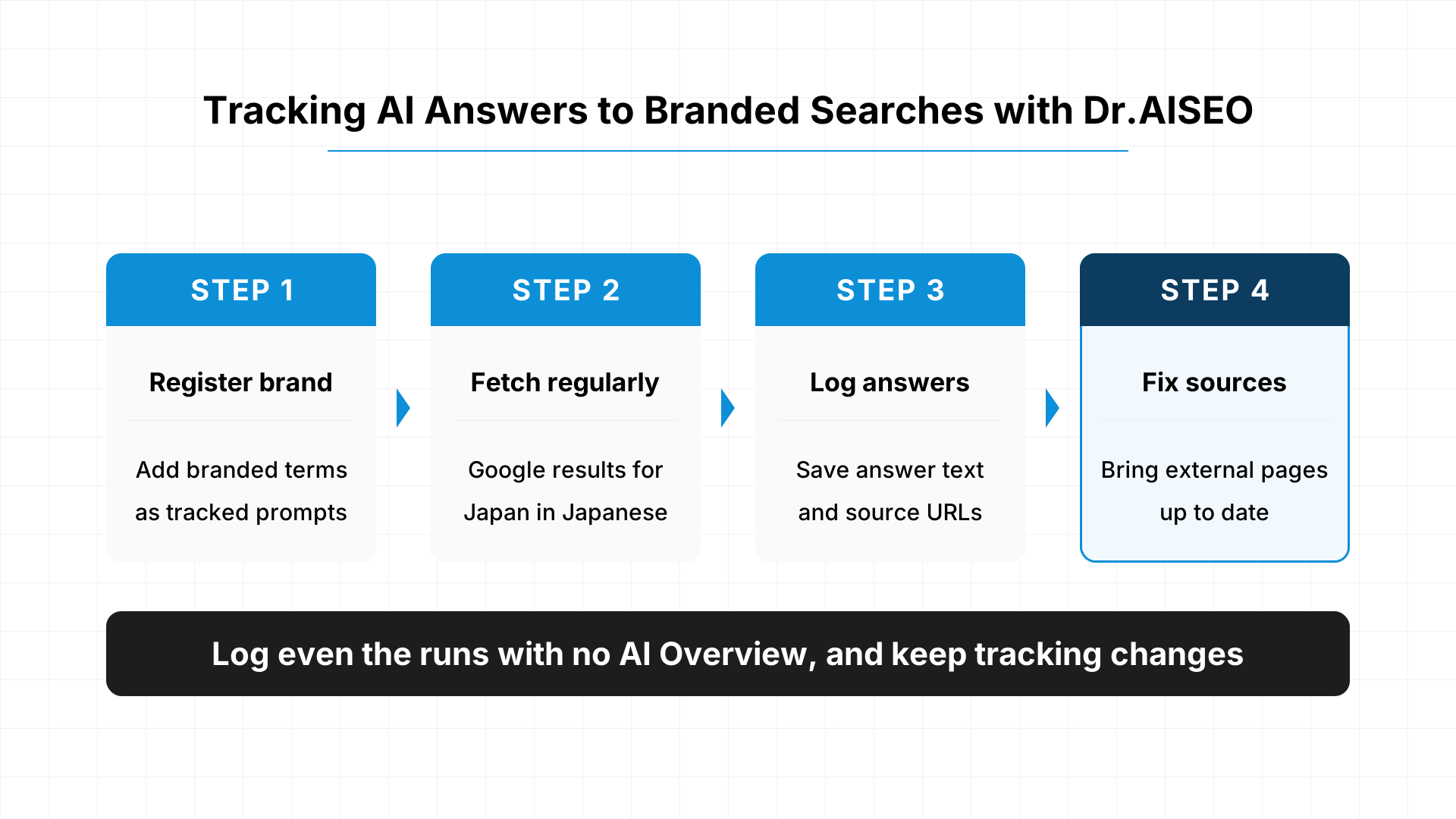
AI Overviews appear on some days and not others, and their sources change. Rather than checking once and stopping, recording results under the same conditions over time lets you notice changes and confirm the effect of the actions you take. Dr.AISEO can keep that record automatically.
Track Your Brand Name As Is
In Dr.AISEO, you can register your brand name and branded search terms such as "(brand name) reviews" as tracking targets. Google AI Overviews are retrieved from search results pages with the region set to Japan and the language set to Japanese. Runs where no AI Overview appeared are recorded too, so you can track how often AI Overviews appear for your brand name in Japanese search results.
Look Back at Answer Text and Sources
For each AI Overview retrieved, you can view not only aggregated figures but also the answer text and the URLs it cited. You can look back through the records to see which external pages are being used to describe your company, and how the answer changed after you fixed a source. Past AI answers cannot be recovered later unless they were recorded.
Summary: Manage What AI Says About You in Branded Search, Too
In September 2026, AI Overviews began appearing on roughly 80% of US Google searches that include a brand name. Most of them appear at the very top of the search results, and their sources are mainly external pages such as Wikipedia, YouTube, and LinkedIn. Branded search is no longer a search where it is enough for your own site to rank first.
Public data does not yet show the situation in Japanese search results. The most reliable way to start is to search for your brand name and record the results, check for changes in click-through rate in Search Console, and bring the pages used as sources up to date.
With Dr.AISEO, you can keep recording the AI Overviews that appear for your brand name in Japanese search results, down to the answer text and sources. Start with the free plan and see how AI describes your brand.

![[2026 Update] Search Traffic Is Down 20%: An AISEO Business Strategy for Keeping Customer Touchpoints in the Age of AI Answers](/img/column/en/search-traffic.svg)